
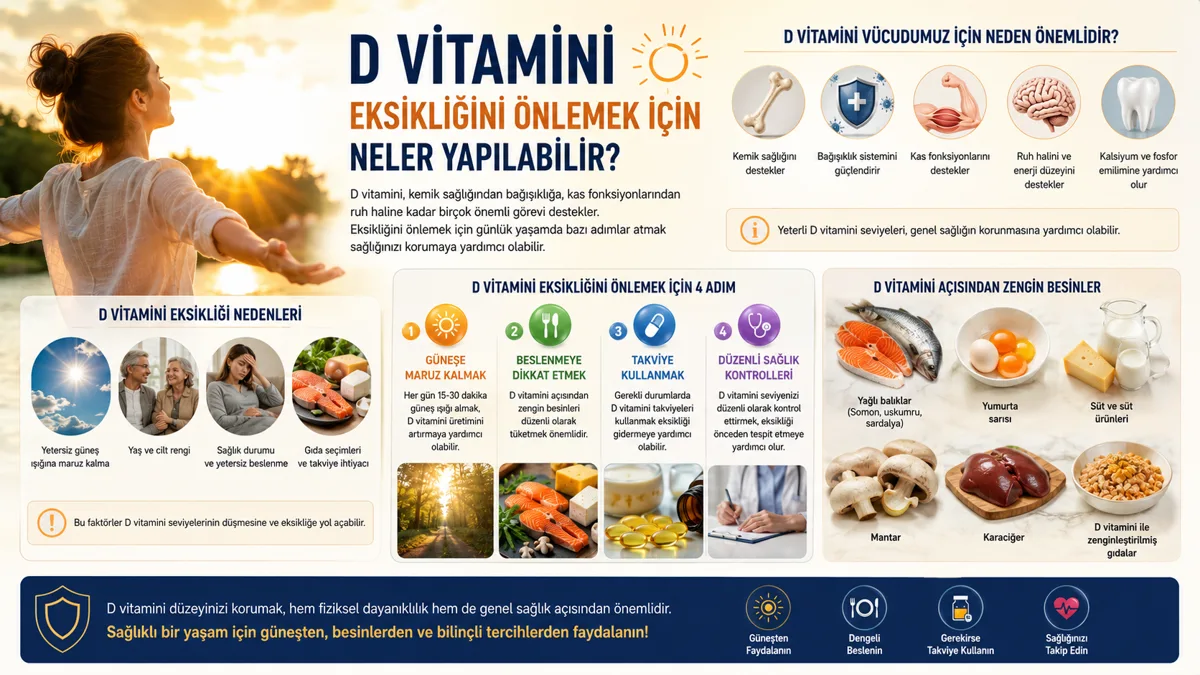
What Can Be Done to Prevent Vitamin D Deficiency?
Today, changes in lifestyles, reduced time spent outdoors due to technological developments, and changing dietary habits may lead to insufficient intake of some essential vitamins required by the body. One of the vitamins that stands out in this regard is vitamin D. Often referred to as the “sunshine vitamin,” vitamin D is associated not only with bone health but also with immune system function, muscle structure, mood, and overall energy levels. Therefore, it is thought that various health issues may occur in cases of deficiency. For this reason, it may be beneficial to consider certain measures that can be taken in daily life to help prevent vitamin D deficiency. [1]
Why Is Vitamin D Important for Our Body?
Vitamin D is a vitamin that performs several important functions in the body and is commonly known as the “sunshine vitamin.” Sunlight is one of the primary sources that triggers vitamin D production in the body. In addition, vitamin D is necessary for the absorption of minerals such as calcium and phosphorus, which affects bone health.
Adequate vitamin D levels may help the immune system function properly and support the body's ability to fight infections. It also regulates calcium stores in the bones, supports muscle function, and may have positive effects on mood. [2]
What Are the Possible Causes of Vitamin D Deficiency?
Vitamin D is a vitamin that can be produced by the body when the skin is exposed to sunlight. However, due to modern lifestyles and environmental factors, many people may have low vitamin D levels. The most common causes of vitamin D deficiency include:
Insufficient Sunlight Exposure: People who spend limited time directly exposed to sunlight may be at increased risk of vitamin D deficiency. Especially during the winter months, office workers and people who spend much of their time at night may not receive enough sunlight.
Age and Skin Color: Older adults generally produce less vitamin D through their skin. In addition, the skin of individuals with darker skin tones may be less efficient at producing vitamin D.
Health Conditions and Inadequate Nutrition: Certain health conditions, such as kidney disease, may affect vitamin D metabolism. Vitamin D deficiency may also occur as a result of an inadequate or unbalanced diet.
Food Choices and the Need for Supplements: Vitamin D occurs naturally in certain foods, but insufficient consumption of these foods may contribute to deficiency. In particular, individuals who do not consume enough vitamin D-rich foods such as fish and dairy products may require supplements. [1]
What Should Be Done to Prevent Vitamin D Deficiency?
There are several ways to help prevent vitamin D deficiency. Steps such as exposure to sunlight, maintaining a healthy diet, and using supplements when necessary may help reduce the risk of deficiency.
1. Get Adequate Sun Exposure
Vitamin D production begins in the skin under the influence of sunlight. Especially during the summer months, exposure to direct sunlight can support vitamin D production. Spending time outdoors when the sun's rays are less intense, such as in the early morning or later in the evening, may support vitamin D production while reducing exposure to intense sunlight.
2. Pay Attention to Your Diet
Including foods containing vitamin D in your diet plays an important role in preventing deficiency. Consuming oily fish several times a week and choosing egg yolks and dairy products may increase vitamin D intake.
3. Use Supplements When Necessary
Sometimes, obtaining sufficient vitamin D through sunlight exposure and diet alone may not be possible. In such cases, vitamin D supplements may be helpful. Vitamin D supplements are commonly available in tablet or drop form and should be used according to the advice of a healthcare professional. Vitamin D supplements may be effective in addressing deficiency.
4. Have Regular Health Checkups
Regularly monitoring vitamin D levels may help identify deficiency at an early stage. Routine health checkups are an important step in assessing vitamin D levels in the body and taking action when necessary. Healthcare professionals may recommend supplementation based on an individual's vitamin D levels. [1]
Maintaining adequate vitamin D levels may be important for both physical resilience and overall health. Getting sufficient sunlight, maintaining a balanced diet, and using supplements when necessary may help reduce the risk of deficiency. However, individual needs may vary. Particularly when symptoms such as fatigue, muscle weakness, or frequent infections are noticed, consulting a healthcare professional may be advisable.
References
- https://my.clevelandclinic.org/health/diseases/15050-vitamin-d-vitamin-d-deficiency
- https://www.mayoclinic.org/drugs-supplements-vitamin-d/art-20363792#:~:text=Vitamin%20D%20is%20a%20nutrient,muscles%20and%20brain%20cells%20working.