
Female and Male Body Types: What Are They and What Are Their Characteristics?
Every person has a unique body structure. The overall appearance of the body is shaped by the combination of many factors, including genetic characteristics, age, sex, hormones, muscle mass, fat distribution, eating habits, and physical activity. Therefore, two people with the same height and weight may have very different body shapes.
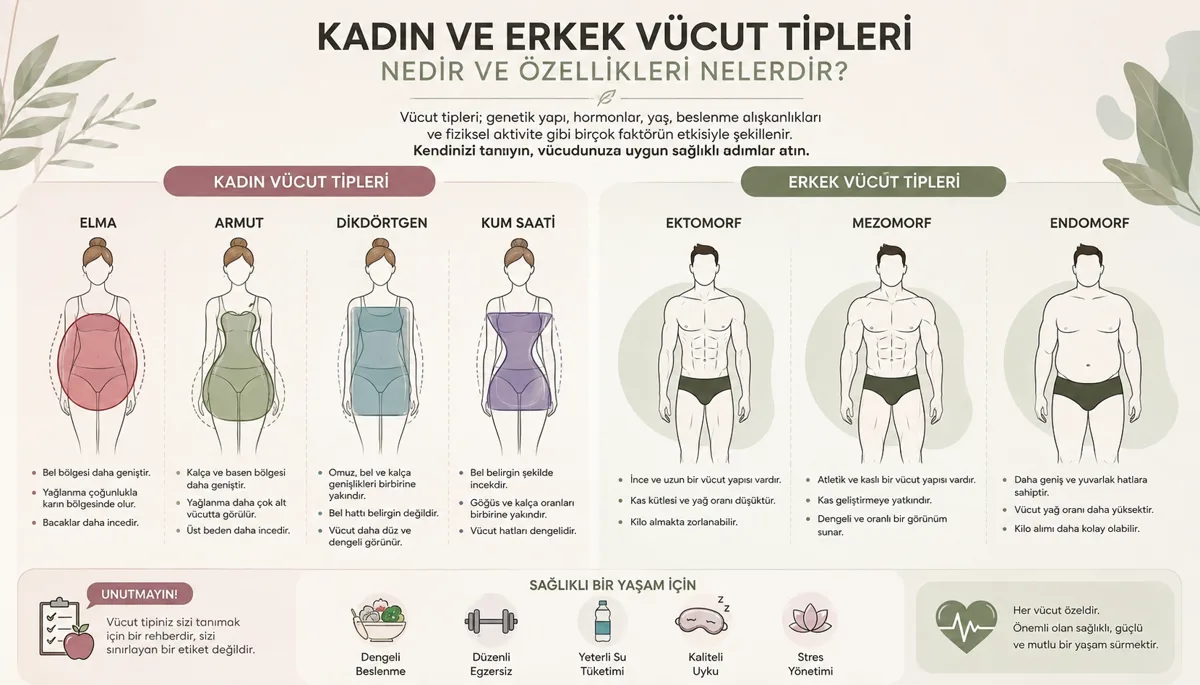
Body types are classifications used to describe overall body structure and how fat and muscle tissue are distributed throughout the body. For women, descriptions such as apple, pear, rectangle, and hourglass are commonly used based on the distribution of body proportions, while men are traditionally described using somatotype classifications such as ectomorph, endomorph, and mesomorph. The somatotype approach describes body structure through three main components: relative adiposity, musculoskeletal development, and linear/slender body structure.
So, what are the different female and male body types, and how are their main characteristics determined?
What Is a Body Type?
Body type is a general classification used to describe a person's overall physical structure and certain characteristics of their body composition.
Many factors contribute to body structure, including:
- Genetic characteristics
- Age
- Sex and hormones
- Muscle mass
- Body fat percentage
- Fat distribution
- Eating habits
- Physical activity level
In particular, the way body fat is distributed around areas such as the waist, abdomen, hips, and legs can vary considerably from person to person. This distribution is known to be significantly influenced by genetic and sex-related factors.
Therefore, body types should not be considered a system that places people into rigid and unchanging categories. A person's body structure can change over time due to aging, hormonal changes, muscle development, changes in body weight, and differences in lifestyle.
Female Body Types and Their Characteristics
Female body types are generally classified according to the proportions of the waist, hips, shoulders, and chest, as well as the overall appearance of body contours.
Some of the most commonly used descriptions include the apple, pear, rectangle, and hourglass body types.
However, it is important to note that these classifications are not definitive medical diagnostic methods. The same person may exhibit characteristics of more than one body type at the same time.
How Many Different Female Body Types Are There?
According to the general classification, female body types can be examined under four main categories:
1. Apple Body Type
In the apple body type, the waist and abdominal area may appear more prominent compared with other parts of the body. The shoulders and chest may appear broader, while the hips and legs may appear relatively slimmer.
With this body type, there may be a tendency for body weight to be concentrated particularly around the torso.
However, it is not appropriate to assess a person's health based solely on their appearance. In particular, waist circumference can be considered as an indicator in overall health assessment independently of body weight.
2. Pear Body Type
In the pear body type, the hips, buttocks, and upper thighs may be more prominent compared with the upper body.
The waistline may appear more defined, while the shoulders and chest may have a narrower appearance.
A greater concentration of body fat in the lower body is one of the common differences in body composition observed among women. In addition to genetic characteristics, sex hormones are also known to play a role in this distribution.
3. Rectangle Body Type
In the rectangle body type, the width of the shoulders, waist, and hips may appear relatively similar.
The waistline may be less defined compared with other body types. As a result, the body may appear to have a straighter and more balanced silhouette.
Increasing muscle mass and improving body composition may alter the appearance of this body structure over time.
4. Hourglass Body Type
In the hourglass body type, the waist is more defined, while the chest and hip measurements may appear relatively similar.
The noticeable difference between the waist and the chest and hip areas is one of the most characteristic features of this body type.
However, it would not be appropriate to describe any body type as the “ideal” or “healthiest” body type. Body shape primarily describes physical appearance and does not, by itself, indicate a person's health status.
Male Body Types and Their Characteristics
When discussing male body type classifications, the terms ectomorph, mesomorph, and endomorph are frequently used.
This approach forms the basis of the traditional classification known in the literature as somatotype. Somatotype assessment considers characteristics such as relative adiposity, musculoskeletal development, and the linear or slender structure of the body.
How Many Different Male Body Types Are There?
The traditional classification includes three main male body types:
1. Ectomorph Body Type
The ectomorph structure is generally characterized by a thinner and more linear body shape.
People with this structure may have:
- A thinner bone structure
- Lower overall body mass
- Longer and slimmer-looking limbs
- Less prominent fat tissue
However, a person described as an ectomorph does not necessarily have a low body fat percentage or have difficulty building muscle. Body composition can vary significantly from person to person.
2. Mesomorph Body Type
The mesomorph structure is associated with more pronounced musculoskeletal development and an athletic appearance.
This body structure may be characterized by:
- More prominent shoulders
- Well-developed muscles
- A stronger-looking torso
- A proportionate body appearance
However, it would not be accurate to assume that everyone classified as a mesomorph is naturally athletic. Muscle mass and body composition are influenced not only by genetics but also by resistance training, nutrition, sleep, and lifestyle.
3. Endomorph Body Type
The term endomorph is traditionally associated with a rounder body structure and relatively higher adiposity within the somatotype classification.
People with this structure may have:
- A higher body fat percentage
- A broader-looking torso
- Rounder body contours
However, statements that people with an endomorph body type “gain weight easily” or necessarily have difficulty losing weight do not apply to everyone. Energy balance, nutrition, physical activity, sleep, age, and genetic factors all contribute to determining body weight and body composition.
Can Body Type Be Changed?
This is one of the most frequently asked questions about body types.
First, characteristics such as genetically determined bone structure, natural body proportions, and fat distribution cannot be completely changed. However, body composition and physical appearance can be significantly improved.
Through regular exercise, adequate and balanced nutrition, appropriate energy intake, and healthy lifestyle habits:
- Muscle mass can be increased.
- Body fat percentage can be reduced.
- Muscle shape and definition can be improved.
- Physical performance can be enhanced.
- Body composition can be improved toward a healthier level.
Research shows that genetic factors play an important role in body shape and fat distribution, while environmental and lifestyle factors also influence body composition.
Therefore, the goal should not be to transform into a particular “ideal body type,” but rather to establish a healthy and sustainable lifestyle that suits your individual body structure.
Should Nutrition and Exercise Be Based on Body Type?
Body type alone is not a sufficient criterion for creating an exercise or nutrition plan.
For example, being classified simply as an “ectomorph” does not necessarily mean that a person should follow a high-calorie diet. Similarly, someone classified as an “endomorph” does not necessarily need to follow a single standardized diet.
When creating an individualized nutrition and exercise program, many factors should be considered together, including:
- Age
- Height and weight
- Body composition
- Physical activity level
- Exercise history
- Goals
- Eating habits
- Health status
Especially when specific goals such as muscle development, fat loss, or improved performance are involved, individualized planning is a more appropriate approach.
Why Can Knowing Your Body Type Be Useful?
Body type classifications may help people better understand their own physical characteristics. They can provide a practical starting point, particularly when choosing clothing, planning exercise, and understanding general body composition.
However, rather than viewing your body type as a “label,” it is more appropriate to see it as a general description that can help you understand your body's current characteristics.
The human body is not static. Age, hormonal changes, muscle development, changes in body fat, and lifestyle differences can all alter the appearance of the body over time.
A Healthy Body Is About More Than Body Type
Regardless of your body shape, a healthy lifestyle is based on balanced nutrition, regular physical activity, adequate sleep, and sustainable lifestyle habits.
Apple, pear, rectangle, or hourglass; ectomorph, mesomorph, or endomorph...
These descriptions may help you understand your body, but they do not determine your health on their own.
Rather than focusing solely on a number on the scale or achieving a particular body shape, it is much more valuable to aim for a stronger, more active, and healthier lifestyle.
Remember: Every body is different, and there is no single ideal body shape for a healthy body.